


Best Safari Vehicle for Wildlife Photography in Kenya: A Practical Guide (2026–2027)
Your vehicle is part of your photography equipment.
A great camera cannot compensate for a blocked view or a rushed sighting. In Kenya, the safari vehicle influences your angle, stability, shooting position and how long you can comfortably wait for wildlife. This guide focuses on what photographers should confirm before hiring.
Know the vehicle you are booking
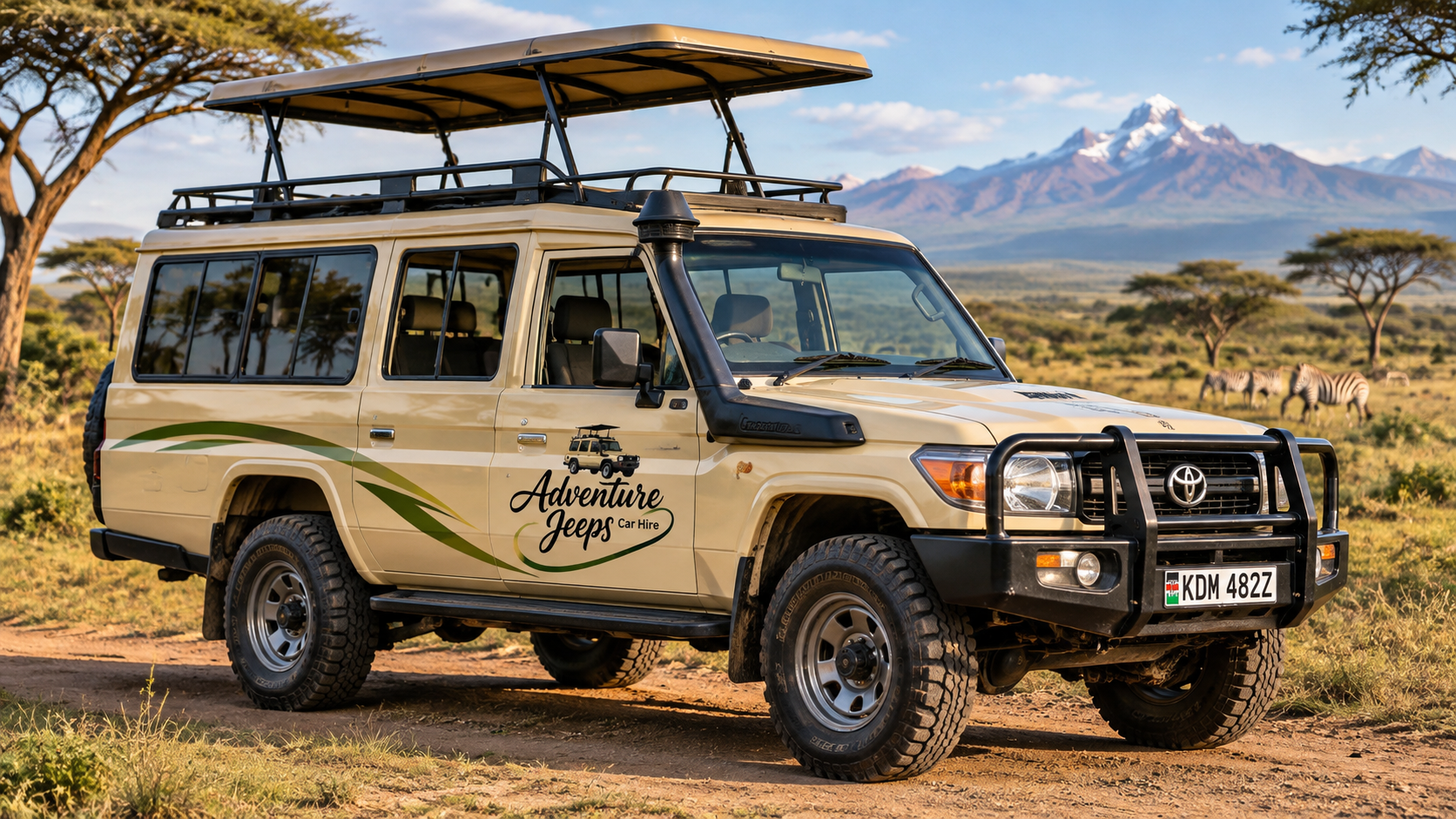
This is a branded Safari Adventure Jeeps vehicle photograph. Always confirm the actual assigned vehicle, configuration and rental inclusions with the team before travel.
The pop-up roof advantage
Kenyan safari-converted Land Cruisers often feature a roof that lifts to create an elevated viewing position. This can help photographers work above the window line while staying inside the vehicle. The precise opening size, number of shooting positions and roof design vary by conversion, so request photographs of the actual vehicle.
Window access and passenger count
An advertised seat count does not tell you how many photographers can shoot comfortably at the same time. If everyone carries a long lens, fewer passengers may offer a better experience. Ask about side windows, access to both sides of the vehicle and whether passengers can move safely between seats when stationary.
Stability and equipment handling
On rough tracks, protect lenses and camera bodies in padded bags. Avoid resting expensive equipment on unstable surfaces. Beanbags and other supports may be useful when permitted and compatible with the vehicle. Confirm what can be carried, and never mount equipment where it obstructs the driver.
The importance of a patient driver-guide
Photography requires anticipation and careful positioning rather than simply chasing sightings. Explain your priorities before the trip: birds, big cats, elephants, landscapes or a mixture. A knowledgeable driver-guide can help plan suitable times and routes while respecting park rules and other vehicles.
Light, season and realistic expectations
Early and late daylight can produce attractive conditions, but sightings are never guaranteed. The Mara is associated with expansive grasslands and predator photography; Amboseli offers elephant subjects and the possibility of Kilimanjaro views when weather permits. Build time into the itinerary instead of expecting a specific animal at a specific moment.
A photography-focused booking checklist
Ask for the exact vehicle model and interior layout, pop-up roof photographs, number of photographers, luggage capacity, driver-guide availability, daily operating hours and any restrictions on gear. Request a same-day personalized quote from Adventure Jeeps and confirm all inclusions in writing.
Quick-reference checklist
| Planning point | What to confirm |
|---|---|
| Pop-up roof | Elevated views and shared shooting positions |
| Side windows | Lower camera angles and side-on subjects |
| Passenger spacing | Room for lenses and safe movement |
| Gear storage | Protection for bags and accessories |
Frequently asked questions
Is a pop-up roof better than a standard SUV for photography?
It often offers more flexible viewing positions, but suitability depends on the exact vehicle configuration and the number of photographers.
Can I use a tripod inside the vehicle?
Space and safety vary; ask the operator about permitted supports and practical alternatives such as a beanbag.
Will I see the Great Migration?
Wildlife movements vary with conditions and season. No responsible operator can guarantee a particular sighting.
Do photographers need a private vehicle?
A private vehicle may improve flexibility and reduce competing shooting positions, especially for groups with substantial camera equipment.
Travel and park access requirements can change. Verify current rules, vehicle specifications and quotation inclusions before booking. Wildlife sightings and mountain visibility are not guaranteed.