
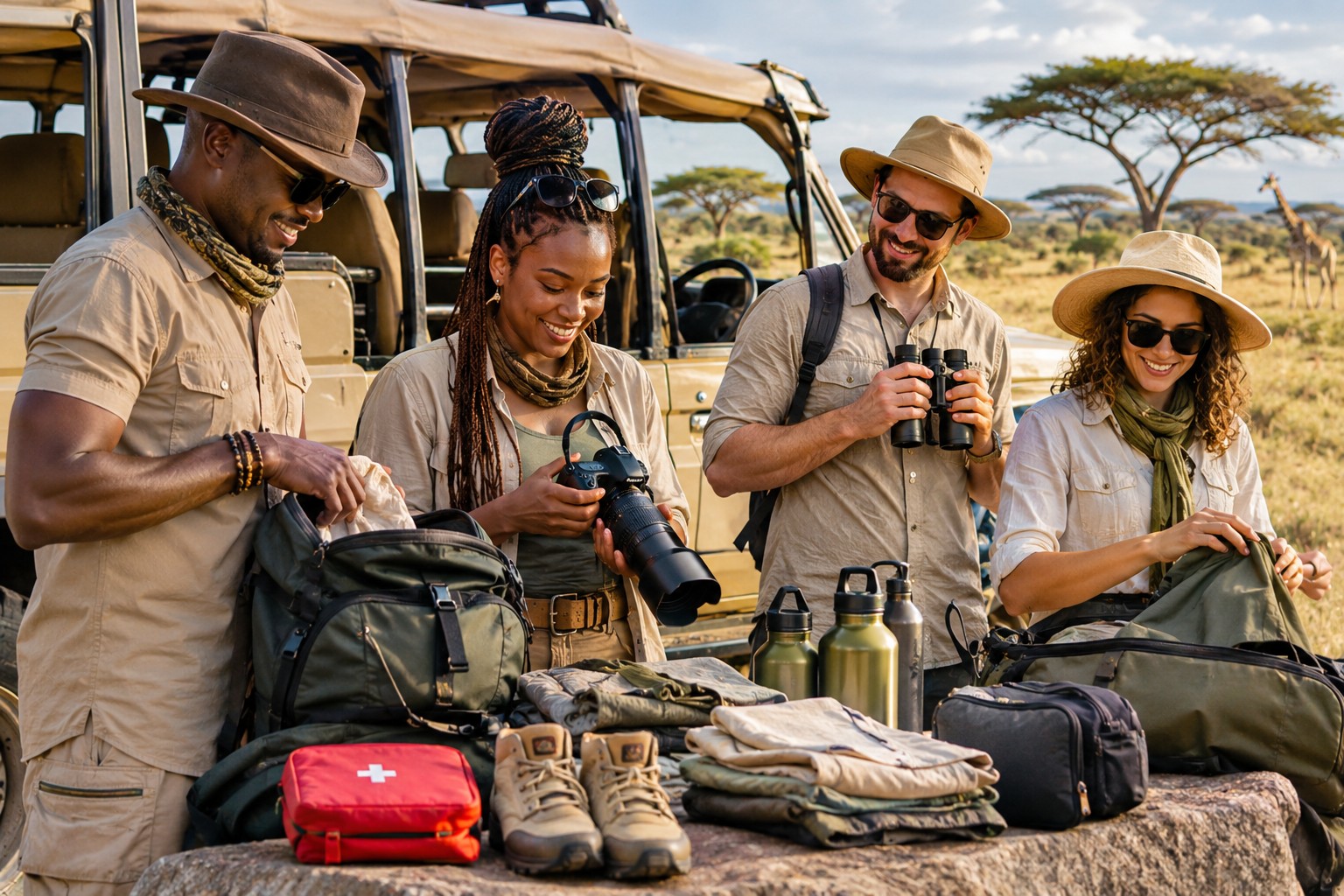

What to Pack for a Kenya Safari: The Practical Vehicle Travel Checklist (2026–2027)
Packing well improves the safari itself. The right day bag, layers, camera setup and luggage format can make long road transfers and game drives noticeably easier.
Practical safari planning for international travellers
Pack for changing temperatures, not one weather forecast
Safari days can include cool early mornings, warm afternoons and breezy evenings. Light layers are more useful than one heavy outfit. Neutral, comfortable clothing works well for long vehicle days, while a light jacket or fleece is useful for early departures.
A hat, sunglasses and comfortable closed shoes are practical additions. If your itinerary includes lodge dinners, city stays or beach extensions, pack those separately from your game-drive clothing.
The small bag you keep inside the vehicle matters most
Your day bag should contain the items you need without opening your main luggage: passport or copies, medication, sunscreen, lip balm, tissues, charging cable, power bank, camera batteries, memory cards and a reusable water bottle.
Keep valuables with you rather than in luggage that may be stored at the back of the vehicle.
Prepare your camera before the wildlife appears
Wildlife moments happen quickly. Charge batteries before departure, clear memory cards and keep your most-used lens accessible. A small lens cloth is useful in dusty conditions.
If photography is a major priority, tell the operator before booking. Passenger count, seating position and roof configuration can affect how easily you move and shoot inside the vehicle.

Why soft-sided bags work well in safari vehicles
Safari vehicles must balance passengers, camera equipment and luggage. Large rigid cases can consume usable space quickly, especially with multiple travellers.
Soft duffels or flexible travel bags are easier to position. Before arrival, send the operator your passenger count and approximate luggage volume so they can recommend an appropriate vehicle.
Keep essential documents and medication within reach
Carry required travel documents, insurance information, prescriptions and essential medication in your hand luggage. Entry and health requirements can change, so verify them through official government sources for your nationality and route before travel.
For Kenya, use the official government eTA website rather than unofficial application services when checking current entry requirements.
Frequently asked questions
What should I keep in my safari day bag?
Medication, water, sunscreen, documents, camera items, charging accessories, sunglasses and a light layer are useful essentials.
Are hard suitcases allowed on safari?
They may be accepted, but soft-sided luggage is often easier to fit inside safari vehicles. Confirm luggage limits with your operator.
Do I need special safari clothing?
No special uniform is required. Comfortable layers in practical colours are usually sufficient.
Should I bring binoculars?
Yes if you have them. Binoculars can improve wildlife viewing when animals are farther from the road.
Turn your safari idea into a clear transport plan
Share your travel dates, passenger count, luggage, destinations and preferred safari style. Adventure Jeeps can prepare a personalized same-day quotation and offers complimentary airport pickup when you book with the company.
+254 711 249 301 · info@safariadventurejeeps.com